Doing more has become the default answer.
You are wondering whether effort is the only thing worth looking at. Fuel, sleep and recovery deserve a place in the conversation, too.
So why is everyone telling you to stop?
Lift heavier. Do less cardio. Watch your cortisol. Meanwhile, you would quite like to feel strong, enjoy your workout and still have energy for the rest of your life. Let’s make sense of movement, nourishment and recovery in the body you have now.
$108 once · Lifetime access · Learn at your pace
With Dr. Kristi Harter. Created by Dr. Michele Burklund and Dr. Kristi Harter.
Tests, supplements and individual care are separate.
The class. Our complete protocol. The exact products and why. Your companion ebook. Lifetime access.
Let’s stay in touch. Join our emails.




You are wondering whether effort is the only thing worth looking at. Fuel, sleep and recovery deserve a place in the conversation, too.
You want to understand hormones, metabolic health and changing capacity before deciding what your next routine should look like.
The stairs. The travel. The dancing. Carrying the things and people you love. Strength has become a much more interesting conversation.
You want the hike, the waves, the dancing. You also want to wake up the next morning feeling ready for your life. Meet Dr. Kristi and get a first look at The Movement Edit, where strength, fuel and recovery belong in the same conversation.
Meet Dr. Kristi Harter. See how we teach. Start with the free trailer.
Get a feel for the conversation.
Then decide if this is your place to begin.
You want to feel strong enough for what matters to you. To choose movement with intention. To take recovery seriously without feeling that you have somehow fallen behind.
Explore hormones, fuel, sleep and the wider picture of fitness. This is education to help you think more clearly about movement in midlife, with space to adapt the conversation to your own capacity and goals.
A little practical. A little mystical. Very Rhea.
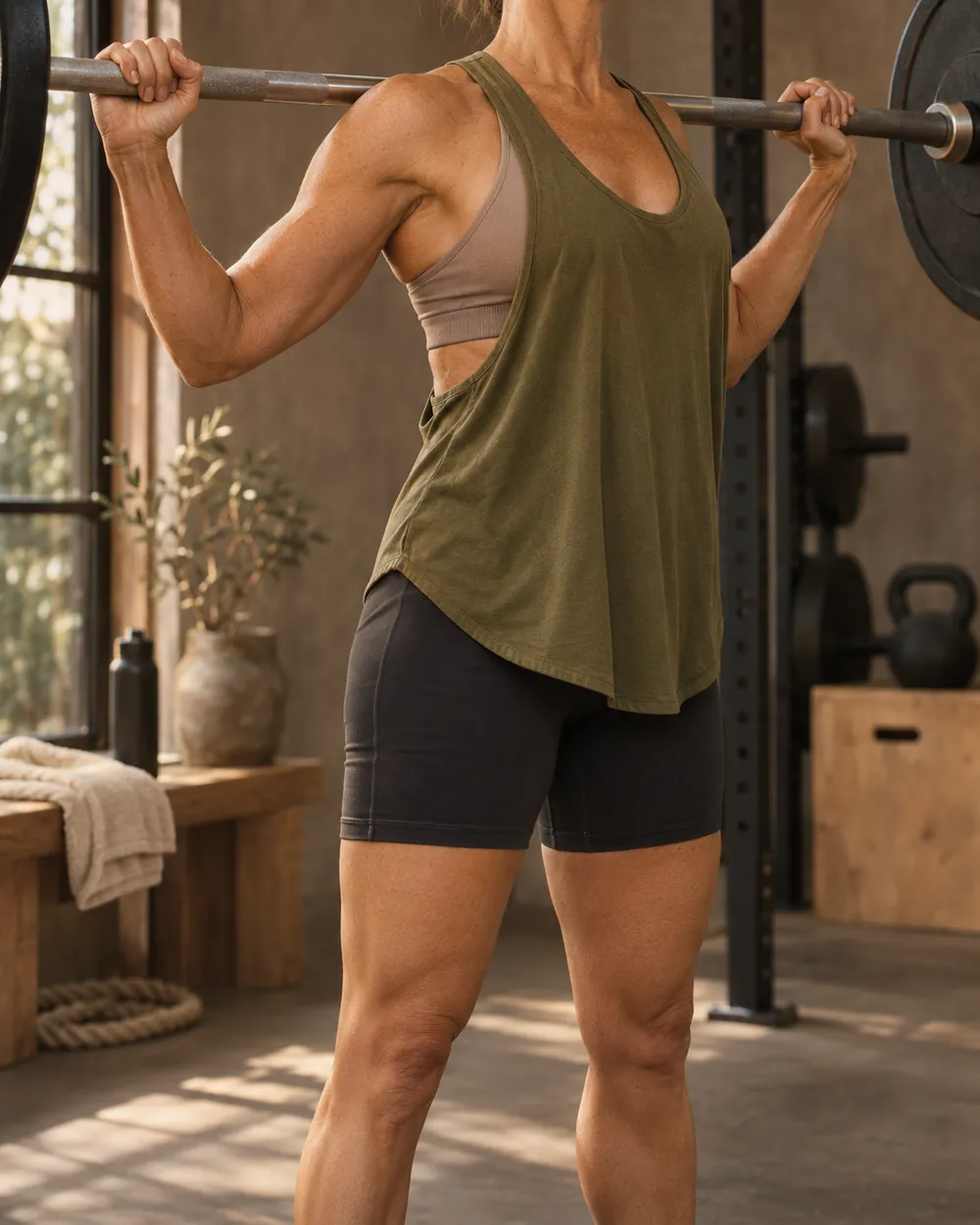
Let’s leave you some energy for it.
The goal is a rhythm that makes room for feeling strong, enjoying movement and coming back for more. Start with your sleep, nourishment and current capacity. Then look at what your training is asking of you.
Give your muscles a challenge you can control, with room to progress.
Walk, dance, swim or ride. Cardio can still belong in this chapter.
Enough food, sleep and easier days belong in the plan.
An example rhythm to build toward. Shorter sessions count, and your starting point, symptoms and recovery help set the pace.
Strength + 30 minute brisk walk
30 minute brisk walk
Easy movement or rest
Strength + 30 minute brisk walk
30 minute brisk walk
30 minutes of moderate movement you enjoy
Rest. See how you feel.
The walking adds up to 150 minutes across the week, alongside two strength sessions. You can split walks into shorter sessions. This is an example based on general activity guidance, not individual exercise programming.
Explore the themes behind a more thoughtful approach to movement.
01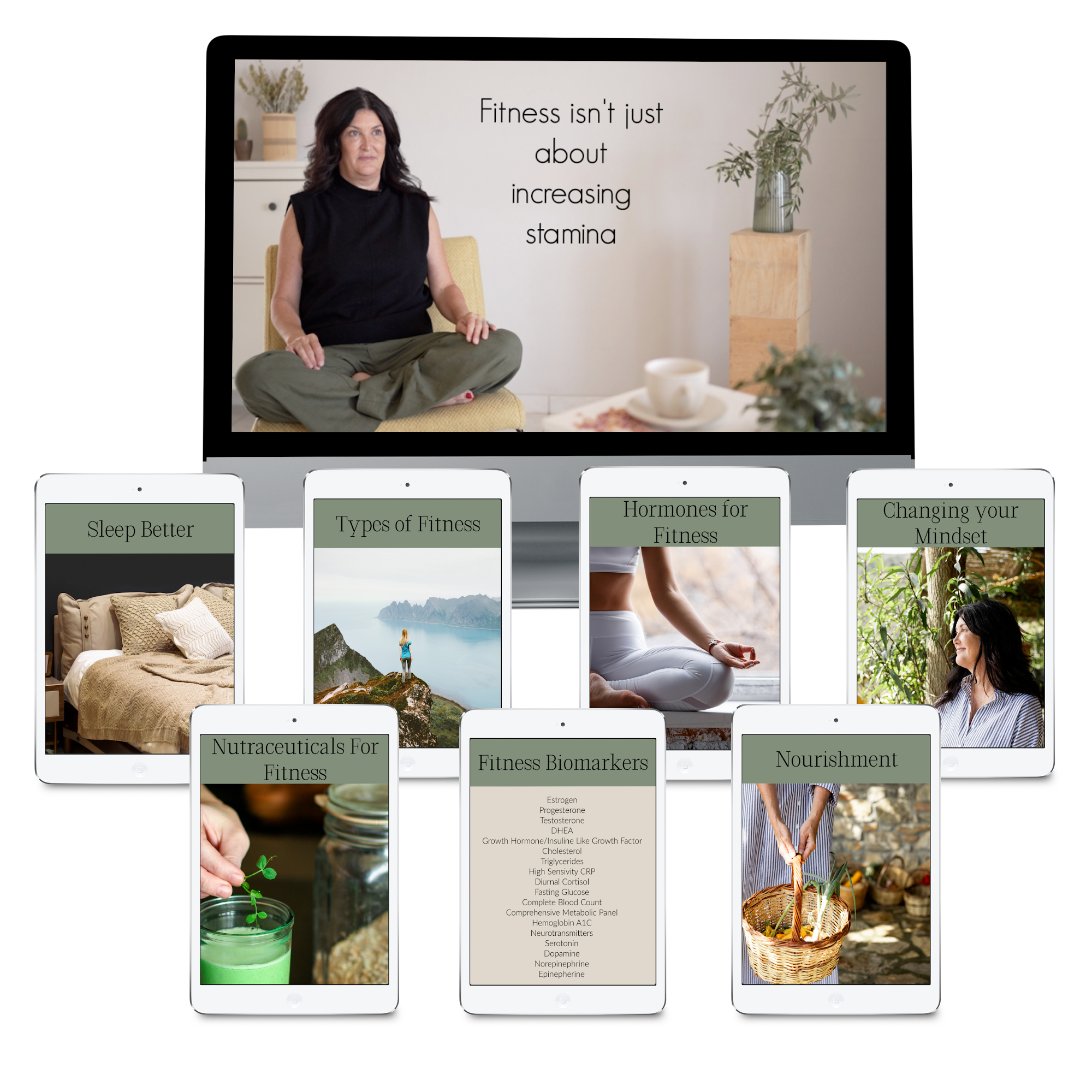
Begin with what you want more room for in your life. Explore movement in the context of strength, capacity and the everyday experiences you want to keep enjoying.
02Explore different ways to move and the place of personal preference. Begin where you are, with room to find a rhythm that fits your life and current capacity.
03Explore exercise alongside hormonal changes, energy and recovery. Understand why the wider picture matters when you consider what deserves your effort now.
04
Look at changing strength, recovery and body composition with more context. Bring nourishment and rest into the picture alongside movement, with questions you can take into an individualized plan.
Strong for the life you still want to live.
Make The Movement Edit yours · $108Your recorded teaching, Optimal Fitness companion guide, holistic protocol education and everyday practices. Return to the ideas as your needs and goals evolve. This course provides education; individual exercise programming is arranged separately.
Private consultations with either of us start at $1,555 for 75 minutes. Rhea brings our teaching and educational protocols into your own time, for $108. Your class does not include an individual consultation or medical care.
The complete recorded class, ready when you are. Bring your questions, make a cup of tea, and learn at your own pace.
Our educational protocol, shaped by medical training and years of patient care. The products, brands, and formulations we recommend, with the reasoning behind each choice.
Explore relevant tests, the written lab guides included with your class, and what a result can and cannot tell you. Bring better questions to your next appointment.
The practices within your teaching, ready to explore in your own life. A little practical. A little mystical. Very Rhea.
Download your companion guide, underline the good parts, and return to the ideas you want to make your own.
Come back to your purchased class and included materials whenever you like. One payment. No monthly subscription. No keeping up.
Strong for the life you still want to live.
One payment of $108. No required tests or supplement purchases. Individual care is separate.
Shop the products we use in practice. The full protocol and detailed explanations are inside your course.
Explore the supplement EditThe labsExplore the related testing options, beginning with your history and what a result could help clarify.
Explore the lab collectionTests and supplements are optional, separate purchases. You can take the class without buying either.
We wanted to understand conventional medicine deeply. We went to naturopathic medical school for the science, the clinical training, and the skills to examine the body and understand disease.
We also wanted more room for the questions that brought us to medicine in the first place. Why is this happening? What is driving it? What does this woman need to feel well?
So we begin with nourishment, sleep, movement, and the life you are actually living. Then we consider where botanical medicine, targeted nutrients, functional testing, and other treatments belong.
Two naturopathic physicians.
A functional medicine mindset. A heart in nature.
We also want to know about
the woman on the table.
How are you sleeping? Has sex become uncomfortable? Where did your energy go? What has your cycle been doing? And when was the last time you felt like yourself?
Your hormones live in a whole body.
Our medicine starts there.
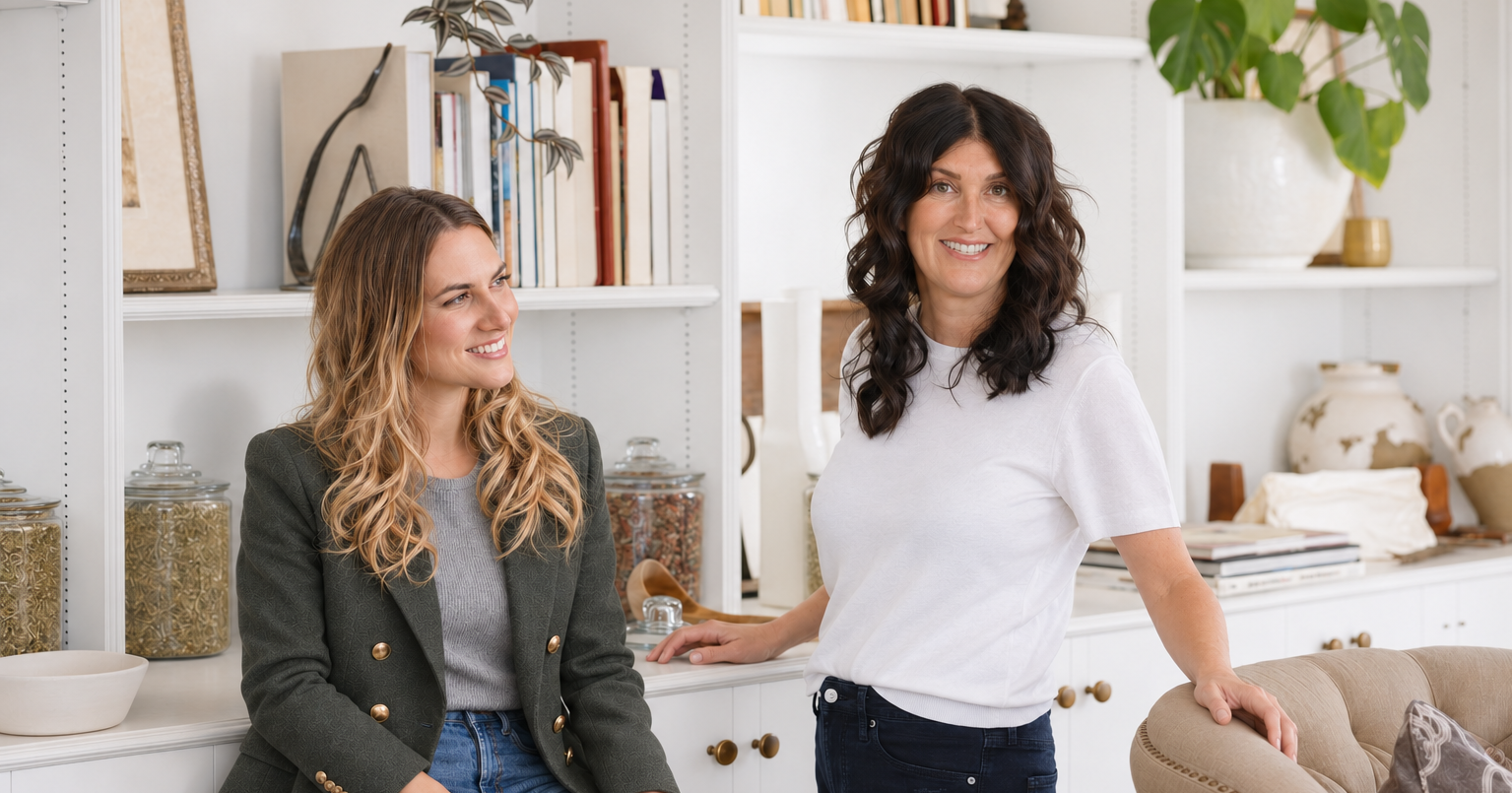
Naturopathic Physician & Functional Medicine Doctor
For 20 years, patients came to Dr. Kristi’s stunning clinic in Santa Barbara. The patient roster? More red carpet than waiting room. Her work with a celebrity clientele brings decades of whole person care to Rhea, along with her own experience of menopause.
Naturopathic Physician & Functional Medicine Doctor
Dr. Michele has formulated supplements for leading wellness companies, lived in Greece for a decade, and became pregnant naturally at 44. A little Greek goddess energy came home with her. Now navigating perimenopause herself, she brings clinical knowledge, botanical medicine and lived experience to the same conversation.
Start with what matters to you. Each teaching stands on its own.
The weights, the walks, the cortisol talk. Let’s make sense of what your body needs now.
Your favorite hike has not suddenly become a hormonal misdemeanor. Cardio still has a place in midlife. Aerobic movement still supports heart health, while strength training adds benefits for muscle and bone. A temporary cortisol rise during exercise does not establish hormonal harm. What may need adjusting is the intensity, amount, food and recovery around your sessions. The useful adjustment is personal to your body and your week.
Keep the walk. Add a little resistance. Walking is valuable, while strength work offers something different for your muscles and bones. General activity guidance includes strengthening the major muscle groups on at least two days each week. You can begin with manageable resistance and good instruction rather than the heaviest weights in the room. Progress, consistency and recovery matter. If you have osteoporosis, pain or an injury, the starting plan should reflect that.
When getting up from the sofa comes with a new sound effect, it is worth paying attention. Joint symptoms can accompany this chapter, but timing alone does not identify the cause. Hormonal changes may contribute, alongside changes in activity, recovery, injury or other conditions. Start with how the discomfort behaves and what has changed in your routine. Persistent pain, visible swelling or increasing difficulty moving deserves assessment. You should not have to accept every new ache as simply your age.
Heavy is personal. Your muscles need a meaningful challenge for where you are now. Learn the movements with a load you can control, then gradually increase the challenge as you get stronger. Research supports supervised resistance training for muscle and bone health, including after menopause. If you have osteoporosis, an injury or joint pain, get guidance on technique and exercise choice before following someone else’s lifting plan.
Your invitation to get stronger has not expired. Strength can improve well beyond midlife, and you do not need a gym history to begin. Start with movements and resistance that suit your current ability, learn good form and build gradually. Bands, machines, hand weights and bodyweight exercises can all have a place. The useful question is what you can repeat and progress safely, not whether you should have started twenty years ago.
A temporary rise in cortisol is part of the body’s response to effort, not proof that a workout is damaging your hormones. In a yearlong trial, higher versus moderate aerobic exercise volume did not significantly change cortisol levels differently in postmenopausal women. Look at the bigger pattern: your sleep, energy, food intake and recovery. A single hormone reading cannot tell the whole story of your training.
There is more to grip strength than winning an argument with a jar. It is a useful clue about muscular function, and lower grip strength has been linked with higher mortality in large studies. That is an association, not proof that squeezing a hand gripper adds years to your life. Think of it as one measurement within a bigger picture. Building strength throughout your body remains more useful than turning one score into your entire longevity plan.
Your waist does not take requests from your sit ups. Abdominal exercises cannot reliably choose where fat comes off. Body composition can change through the menopause transition, and abdominal exercises strengthen the area without guaranteeing local fat loss. A sustainable mix of aerobic movement, strength work and nourishment is a more useful starting point. Changes in waist size and body fat vary, so judge progress alongside strength, stamina and how your routine fits your life.
Not simply because you are in perimenopause. Interval training has been studied in postmenopausal women and can improve body composition, but that does not make it necessary for everyone. Your starting fitness, symptoms and recovery matter more than a blanket rule. If every session leaves you depleted, reduce the intensity or frequency and rebuild a routine that leaves room for strength, easier movement and rest.
Give strength and aerobic movement their own place, with room to recover between demanding sessions. General guidance is at least two days of muscle strengthening plus 150 minutes of moderate aerobic activity each week. You can build toward that gradually and split movement into shorter sessions. Add comfortable mobility work where useful. The goal is a week you can repeat, not seven days that all feel like a test.
Recovery is part of the plan, including when your calendar has other ideas. A run of poorer performance, persistent fatigue, disturbed sleep or unusual soreness is worth listening to. Reduce the demand and review your food, sleep and rest instead of automatically adding another session. These symptoms do not diagnose overtraining or a hormone problem. If they persist despite easing back, or pain keeps returning, get assessed rather than assuming you simply need to push through.
Yes. A demanding workout needs something to run on besides determination. When food intake repeatedly falls short of training needs, health, recovery and performance can suffer. That does not mean every tired day is a deficiency or that you need another supplement. Start by looking at regular meals, enough overall food and the demands of your week. If persistent fatigue, recurrent injuries or declining performance are part of the picture, an individual assessment is worthwhile.
Join Dr. Michele and Dr. Kristi for conversations about your changing body, our whole body approach and what’s new at Rhea. We’ll welcome you with our free ebook, The Metabolism Edit.
Start with The Movement Edit. Our teaching, our complete educational protocol, and the reasoning behind our very particular choices. Ready when you are.
Make The Movement Edit yours · $108One payment. Lifetime access. Seven day refund window. Tests, supplements, and individual care are separate.
Read the purchase and refund termsBecause the bottle cannot explain itself. The class gives you the reasoning: what is happening in your body, why we begin with the foundations, and where a particular plant, nutrient or test may fit. Your recorded teaching, holistic protocol, everyday rituals and companion ebook stay together in your member space. You can browse the shops without a class, and take a class without buying anything else. Tests and supplements are optional, separate purchases.
Like sitting down with your very particular friends who went to medical school. We talk about the things you are noticing, explain the science and give you a useful place to begin. Food, sleep, movement and everyday rhythms come first. The recorded teaching, protocols, lab education, rituals and companion guide are yours to revisit at your own pace. A little practical. A little mystical. Very Rhea.
The main recorded lessons run about 16 to 33 minutes per class, or just under five hours across all twelve. Leave a little room for the guides, the practices and the occasional “Oh, that makes sense.” Everything is self paced, with lifetime access, so you can take one lesson at a time and return as your questions change. The Gathering is a separate 12 week live experience.
Your saved posts may already qualify as a small library. The Movement Edit brings the ideas into a class you can actually follow. Dr. Kristi Harter explores strength, stamina and how to recover from the movement you love. Your recorded teaching, companion guide and full educational protocol give you the reasoning behind the choices, including our selected products. Watch the trailer, get a feel for us, and come back to the teaching whenever the next question arrives.
There is no live schedule to keep up with, no deadline and no perfect student award. Watch the recorded lessons when you have room, pause when you need to and return later. Your teaching and included materials have lifetime access. You do not have to turn taking care of yourself into another full time job.
You are allowed to be very particular about what gets your time and money. The Movement Edit is a place to understand the choices before adding another thing to your routine. We begin with nourishment, sleep and the patterns behind the concern, then explain where more targeted support may fit. You can take the class without ordering a single test or supplement. Start with the free trailer. The teaching is yours to revisit; individual symptom changes cannot be promised.
Yes. Choose the question that feels most relevant to you and begin there. This individual course is $108 with lifetime access to its included materials. The Complete Collection is $1,061 for all twelve teachings and their companion resources, including Whole Body Reset. You do not need to purchase the Collection to take this class.
Think of the course as better preparation for understanding your body and asking for what you need. It explains the topic, the useful questions and the reasoning behind the options. It cannot diagnose the cause of an individual symptom, interpret your personal results or create an individual treatment plan. Those conversations depend on your history and assessment. Your experience deserves that level of attention.
Come sit in for a few minutes. The free trailer is right here on this page. No signup is needed to watch it. You can see the teaching style, read what is inside and explore the founders’ backgrounds before choosing. If you purchase and decide it is not the right fit, our purchase terms provide a full refund when requested within seven days; refunded course access ends.
The reading behind the conversation. Human studies, botanical research and integrative perspectives, with attention to who and what was actually studied.