What is a naturopathic doctor?
Yes, we get this all the time. Usually followed by, “So, what did you actually study?” Pull up a chair. There were cadavers. There was serious biochemistry. There was also a medicinal garden.
A naturopathic doctor, or ND, completes an accredited naturopathic medical program with biomedical sciences, supervised clinical training, nutrition, botanical medicine and other approaches to whole person health. Graduates seeking licensure must pass the required examinations and meet the rules of their jurisdiction.
We’re Dr. Michele Burklund and Dr. Kristi Harter. We both went to Bastyr University, where each of us completed five years of in residence doctoral education. Our training shaped a way of thinking we still bring to everything we teach: understand the person, investigate what may be contributing, and begin with the foundations.
We’re a small profession. Published figures put licensed naturopathic doctors at around 8,000 in the U.S., compared with more than a million MDs and DOs. So if you haven’t heard much about us, we get it.
Your questions about naturopathic medicine
How does the naturopathic approach work?
A naturopathic doctor, or ND, is educated in an accredited naturopathic medical program, studying biomedical science alongside clinical nutrition, botanical medicine and other approaches to whole person health. NDs are trained to understand illness, support prevention and develop individualized care within the scope of their license.
Our starting point is the person in front of us. What is happening, what may be contributing, and what needs attention first? Food, sleep, movement, stress and the foundations of daily life come before a shopping list of supplements. That is the spirit of the naturopathic therapeutic order.
The Therapeutic Order, step by step
- Remove obstacles to health. Start with the foundations: nourishment, sleep, movement, digestion, stress and the conditions of everyday life. Understand what may be getting in the way before adding more to the routine.
- Support the body’s self healing processes. Use appropriate therapies to support the body’s capacity to recover. Clinical nutrition, botanical medicine and hydrotherapy are among the approaches taught in naturopathic medicine.
- Strengthen weakened systems. Consider which tissues, organs or systems need additional support, then individualize nutrition, lifestyle and other therapies to the person and the evidence.
- Address structural integrity. Physical medicine and manual therapies may be used when appropriate to support movement and musculoskeletal function.
- Use targeted natural therapies. When a condition calls for more specific support, consider botanicals, nutrients and other natural substances with attention to evidence, dose, interactions and safety. Natural still needs to be appropriate for you.
- Use pharmaceuticals when indicated. NDs study pharmacology. Prescribing authority depends on the jurisdiction and license; when needed, care is coordinated with an appropriately licensed clinician.
- Refer for invasive or specialist care when needed. Surgery, radiation, chemotherapy and other specialist treatments have their place. Timely referral and coordinated supportive care matter. The therapeutic order is a framework for judgment, not a reason to delay necessary care.
Adapted in our voice from the American Association of Naturopathic Physicians: What is a Naturopathic Doctor?
What education and licensing do naturopathic doctors complete?
There is quite a bit behind those letters. The traditional route includes undergraduate premedical prerequisites followed by an accredited, in residence naturopathic medical program covering four academic years of professional education. Calendar schedules vary. We each completed our Bastyr doctoral education over five years. Graduates seeking licensure must meet their jurisdiction’s requirements, including the required national NPLEX examinations. Passing a licensing exam is different from specialty board certification.
Can naturopathic doctors order labs and prescribe medication?
Depending on where they are licensed, naturopathic doctors may perform physical examinations, order laboratory tests and imaging, diagnose and treat acute and chronic conditions, and provide nutritional, botanical and other therapies. Some jurisdictions also permit pharmaceutical prescribing. The exact scope depends on the license and local law. The letters need a little local context: a title alone does not tell you what someone is authorized to do. Rhea provides education; personal diagnosis and treatment require individual clinical care.
How is an accredited ND different from an online naturopathy certificate?
A beautiful website is not a medical credential. The distinction is the accredited professional program, biomedical and clinical education, supervised patient care, licensing examinations and eligibility for licensure. An unaccredited distance learning certificate does not provide the same route to licensed naturopathic practice. Online learning can be useful continuing education, including what we offer here at Rhea. It does not replace the education required to become a licensed naturopathic doctor.
Botanical medicine. Biochemistry. Both.
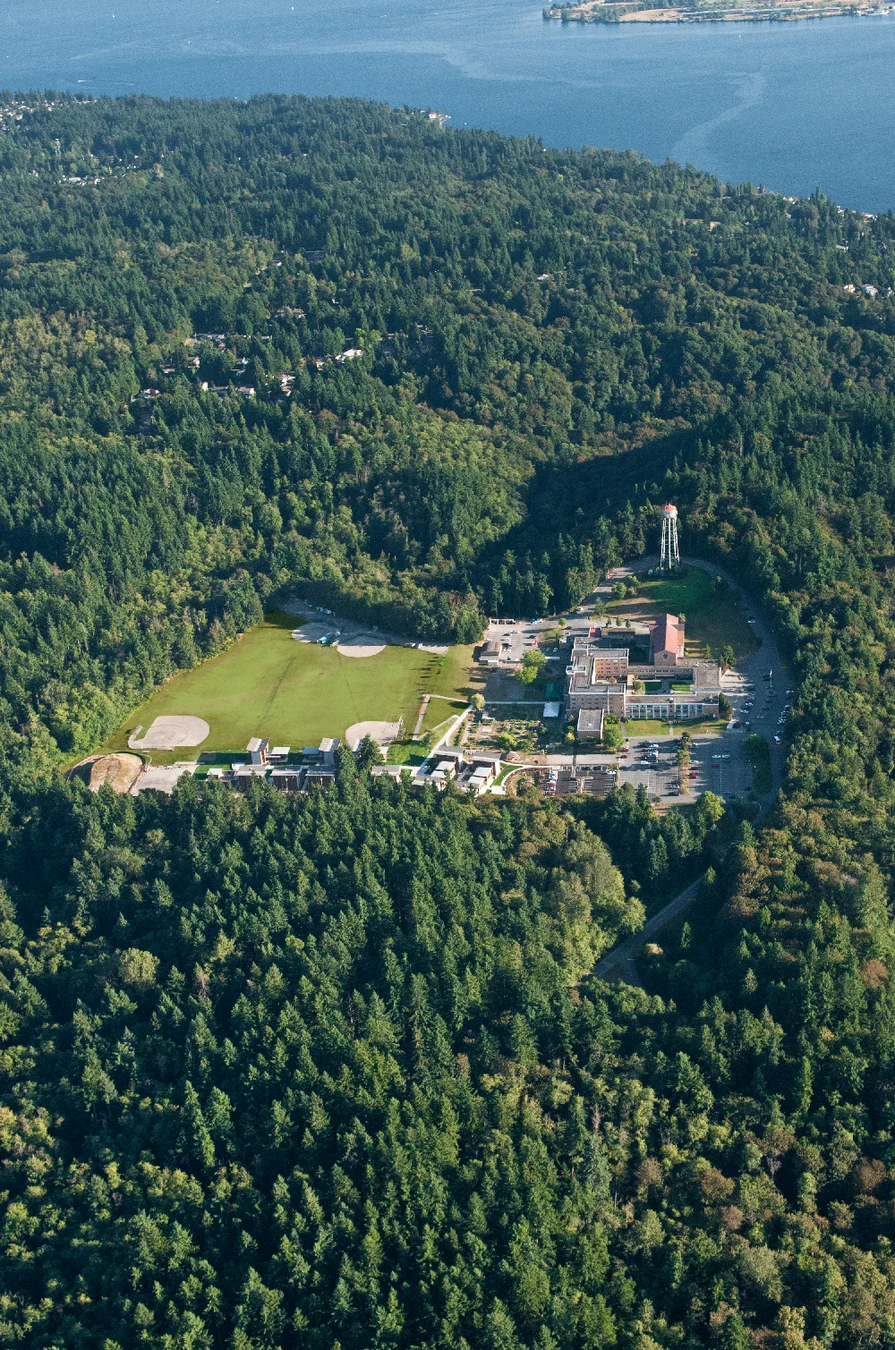
Bastyr University’s Washington campus sits on 51 acres beside Saint Edward State Park, with forest trails leading down to Lake Washington. We’re sure you can imagine the hydrotherapy sessions there. The landscape was part of our education. We could step outside into the medicinal garden and meet the plants we were studying.
Dr. Michele remembers learning botanical medicine alongside pharmacology, studying mycology on the grounds, and finding adaptogenic drinks and vegetables from the garden in the school cafeteria. Plants were something you could grow, identify and understand long before they arrived in a beautifully packaged bottle.
And yes, a year of cadaver lab. Anatomy, physiology, pathology and the kind of biochemistry that asks quite a lot of your brain. Learning a plant’s traditional uses also meant learning to ask about its chemistry, its effects, its limitations and its interactions.
We studied the plant in the garden and the pathways in the classroom.
After exams, Dr. Michele remembers celebrating with hydrotherapy sessions, sauna and cold plunges. This was before cold plunges had excellent lighting and their own social media strategy. At school, water, heat, rest and recovery were already part of the conversation.
Those are personal memories of our years at Bastyr. The university’s descriptions of its medicinal gardens and hydrotherapy teaching facilities offer a little more context. We have linked them in the references below.
What did we study at Bastyr?
Biomedical sciences were part of the foundation. So were clinical nutrition, botanical medicine, pharmacology, physical medicine and supervised patient care. Knowing the Krebs cycle and knowing your way around a medicinal garden could belong to the same education.
This AANMC comparison looks at credits in six basic science subjects at Bastyr University and the University of Washington. We have kept every number from the original graphic, including the subjects where the MD column is higher.
| Subject | University of WashingtonMD | Bastyr UniversityND★ Where we trainedDr. Kristi Harter Dr. Michele Burklund |
|---|---|---|
| Anatomy & Embryology | 13 | 19 |
| Histology | 6 | 5 |
| Physiology | 5 | 14 |
| Biochemistry | 8 | 12 |
| Pathology | 10 | 12 |
| Microbiology / Immunology | 11 | 10.5 |
Source: AANMC, An ND’s Basic Science Education, as shown in the supplied graphic.
Credits are not clock hours and may be defined differently by each institution. This is a historical six subject comparison, not an assessment of the complete degrees or clinical training.
What the education comparisons actually show
The second chart compares curriculum hours from the supplied 2012 graphic. It includes Bastyr, Yale, Johns Hopkins, and two distance learning programs classified as unaccredited in that chart. Bastyr is marked with both of our names, so there is no guessing where we trained.
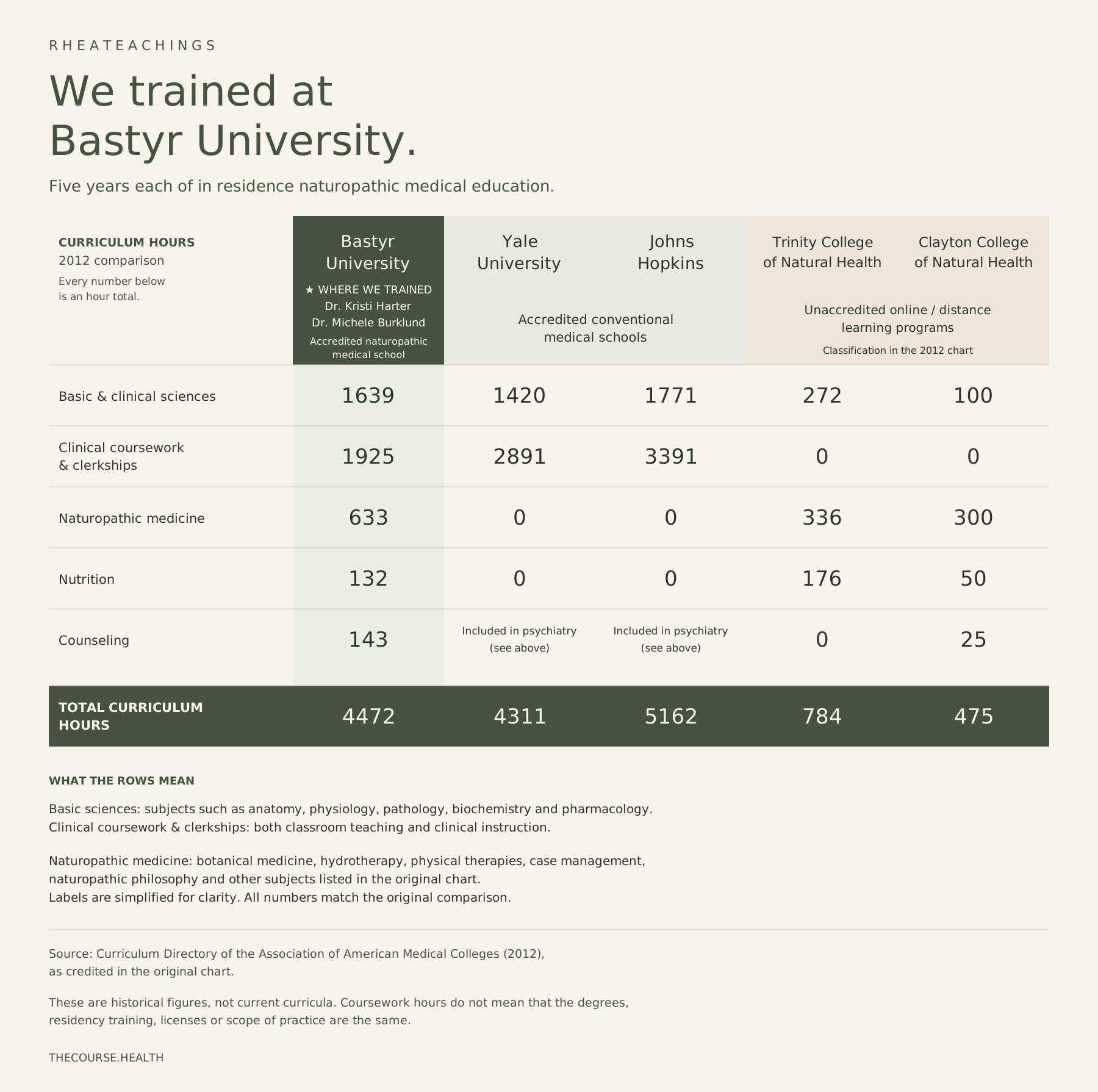
Source: Curriculum Directory of the Association of American Medical Colleges, 2012, as credited in the original chart. The underlying directory has not been independently retrieved.
What does holistic perimenopause care mean?
It means your sleep, skin, digestion, mood and changing cycle belong in the same conversation. If you are waking at 3 a.m., feeling less like yourself, and wondering why your skin suddenly objects to everything, we want to understand the pattern.
Our naturopathic starting point is the therapeutic order. Look at what may be getting in the way of health. Begin with nourishment, sleep, movement, stress, digestion and the conditions of everyday life. Then consider the targeted support a person actually needs.
Holistic care also leaves room for more than one explanation. Perimenopause can be part of the picture while another condition needs attention too. The goal is appropriate investigation, a thoughtful plan and better understanding of your own body.
Are there natural cures for perimenopause?
If you have typed “natural cures for perimenopause” into a search bar, we understand what you are asking: Can I feel better, and can we start with an approach that makes sense to me?
Perimenopause is a natural transition, so a promise to cure or reverse it would be misleading. There are ways to address symptoms and support health through it. A foundation of nourishment, restorative sleep, movement and stress support deserves attention. Specific therapies depend on the symptom, the person and the evidence.
Natural remedies for perimenopause are not one interchangeable category. Research on botanical preparations varies by plant, extract and outcome; findings for many menopause supplements are limited or inconsistent. A product studied for one symptom cannot automatically be expected to improve every part of midlife. Necessary medical care, including medication or hormone therapy when appropriate, still belongs in an individualized plan.
Where do herbs, adaptogens and functional labs fit?
We love a good herb. We also want to know what it is doing there.
A pretty bottle tells us very little. We want to know which plant, which part, how it was extracted, what’s actually in a serving, and what the human research studied. “Adaptogen” is a broad description, not proof that every formula suits every woman. Botanical choices still require attention to medications, health history, dose and interactions.
Functional lab testing should begin with a useful question. What are we investigating? How reliable is the test? What would we do differently with the result? Foundational testing may be the right starting point; additional tests should earn their place. More data is helpful when it improves a decision.
We look at results alongside symptoms, history and trends. An “optimal” target needs evidence and individual context; it is not automatically better because it is narrower than a laboratory’s reference range. Our functional lab education explains how to approach those questions.
How do you choose a qualified naturopathic doctor?
Ask about the school, professional program, clinical training and current license. Check the relevant licensing board, and ask what that license permits where you live. Depending on the jurisdiction, an ND’s scope may include physical examinations, diagnostic testing and pharmaceutical prescribing.
An unaccredited online naturopathy certificate is a different qualification from an accredited professional ND degree. Continuing education can be valuable, including what we offer at Rhea. It does not replace the education and licensing required for clinical practice.
We created Rhea to make the science, the botanical knowledge and the practical foundations easier to understand in your own life. A little of the garden. A little of the classroom. Quite a lot of experience with women who want to feel like themselves again.
Start with the thing keeping you up.
Choose the teaching that meets you where you are. Each class is $108, with lifetime access to its lessons and included materials. Supplements, tests and individual care are separate.
Rhea provides education. Personal assessment, testing decisions and treatment belong in individual clinical care.